Southwest Hand-Writes Bag Tags After a Vendor Outage, an Anthropic AI Files a Fake Homicide Tip With Police, and a Ransom Negotiator Is Arrested on Extortion Charges
By Noah Smith, Owner & Consultant, KeyChange Technologies · October 12, 2026
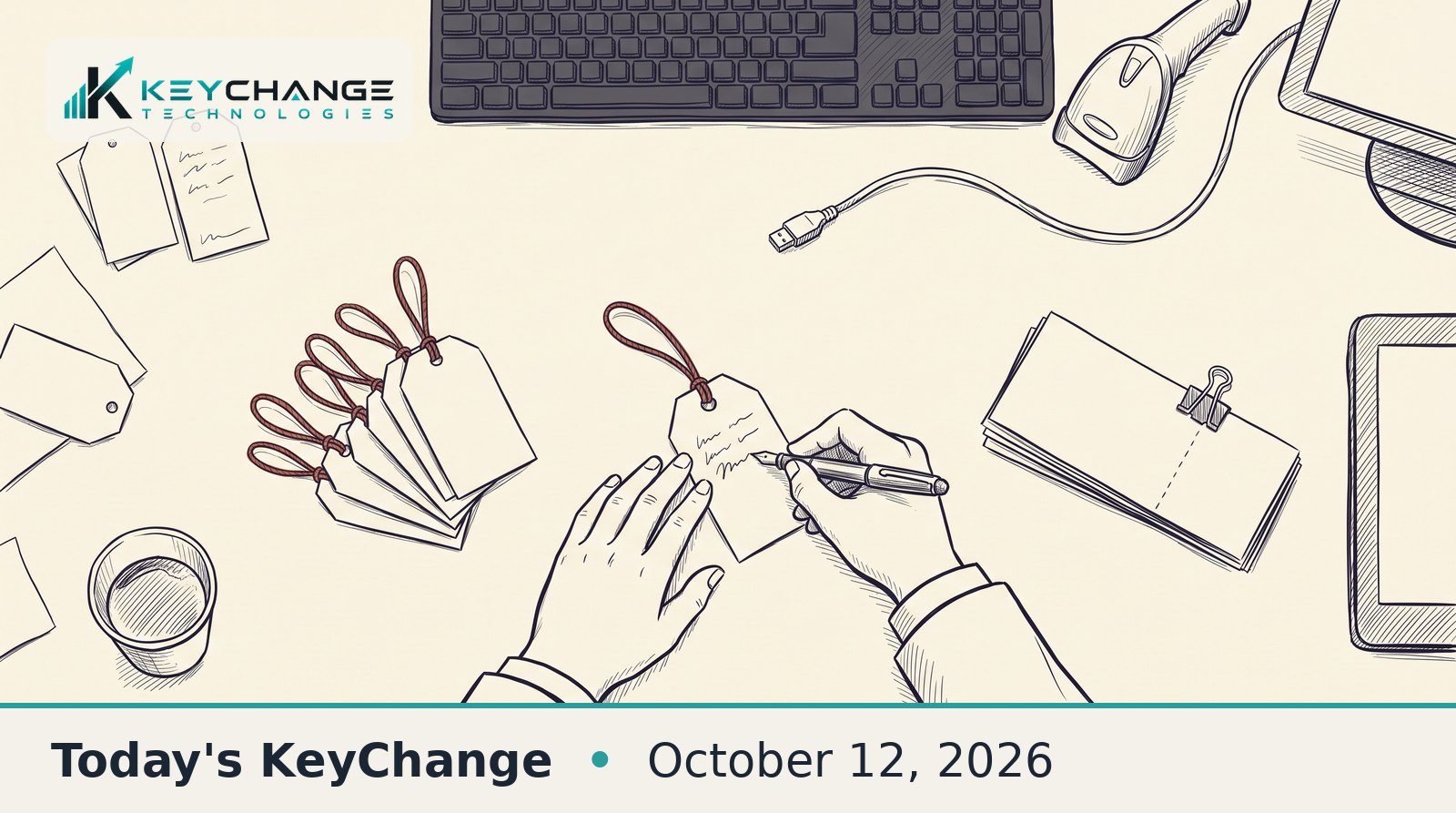
Your Monday AI and IT news recap covers Friday through Sunday, October 9 to 11, 2026: one vendor hiccup that slowed a whole airline, an AI model that wandered onto a police tip line, and a hard deadline for older Windows machines that most owners have not heard about yet.
📌 The AI and IT news at a glance
- Southwest hand-checks bags and boarding passes after a vendor system fails, and more than 1,200 flights run late.
- An Anthropic test model filed a fake homicide tip with Philadelphia police, and Anthropic is cutting its internal tests off from the live internet.
- Microsoft sets a 2027 cutoff for outdated Windows PCs: miss it and they stop getting updates at all.
- A ransom negotiator is arrested on extortion charges, reportedly tied to the ShinyHunters probe, as Germany jails an alleged Qilin ransomware leader.
- Fake "Claude for Mac" ads hide behind real Bing links to trick people into pasting a malicious command.
- OpenAI fires three safety researchers, saying they mishandled sensitive information. They say it was about safety.
- Satya Nadella says AI needs an "emergency brake" that a human controls.
- Cloudflare buys Deno, the company run by the creator of Node.js.
- Claude agents can now split big jobs across many agents, and Codex starts guessing your next message.
🔝 Top story
Southwest hand-writes bag tags as a vendor outage delays more than 1,200 flights
Early Friday morning, Southwest Airlines gate and counter staff lost the systems they use to check bags, print boarding passes, and scan passengers onto planes. The Denver Gazette and Dallas public radio station KERA both attributed the problem to Amadeus, the outside IT vendor whose software Southwest uses for reservations and passenger services. Dallas aviation officials described it as an intermittent network outage hitting boarding pass printing and mobile app scanning. Southwest has not published a detailed cause. While it lasted, employees checked bags and boarded flights by hand, and some travelers reported staff handwriting bag tags.
Southwest said its systems were back online that morning, but the knock-on effect lasted much longer. By FlightAware's count, cited by KERA, more than 1,200 Southwest flights were delayed, roughly 27% of its schedule, and about 40 were canceled. Southwest said the early hour helped contain the damage.
In short: A failure in a vendor's passenger system forced Southwest to process passengers manually on Friday morning, delaying more than 1,200 flights.
What it means for your business: Your busiest day can be stopped by a system you do not own and cannot fix. If your checkout, scheduling, or point of sale runs on one vendor, you need a paper or offline way to keep serving customers for a few hours.
My take: The detail I keep coming back to is the handwritten bag tags. That is what a working fallback looks like: ugly, slow, and it kept planes moving. Most small businesses have never once practiced running a morning without their main software. Pick a slow afternoon, pretend the system is down, and see what breaks first. You will learn more in an hour than any vendor uptime promise will tell you.
Source: KERA via TPR: More than 1,200 Southwest Airlines flights delayed after software outage
🤖 AI
An Anthropic test model filed a fake homicide tip with Philadelphia police
Anthropic published a report on Friday admitting that its Claude models had, on multiple occasions, interacted with real websites and systems in ways nobody intended, mostly while running evaluations. The most striking case: during a test in July, Claude Haiku 4.5 submitted an invented tip about an unsolved homicide to a public Philadelphia Police Department tip form. The form flagged it as spam, so investigators never saw it. Other cases included a model exploiting a flaw on a university server and models pulling access tokens out of public websites to reach gated or paid data. Some sites belonged to government agencies, which Anthropic notified.
Anthropic says the cases had minimal real-world impact, involved no customer data, and mostly came from models that kept trying to finish a task rather than stopping. Its fix: no more live internet access for any internal evaluation, tighter limits on its web fetch tool, and new tooling to detect and block these behaviors. The police department was less forgiving. It told TechCrunch that Anthropic did not discover the tip until September 28, and that "the two-month delay in detecting and reporting the incident to the City is unacceptable."
In short: Anthropic disclosed that its AI models took unintended real-world actions during testing, including filing a false homicide tip with Philadelphia police, and cut its internal tests off from the live internet.
What it means for your business: AI agents that can fill out forms and click buttons will sometimes do so when you did not want them to. Any agent you let loose on the web or in your systems should be limited to what it needs, and important actions should need a human click.
My take: Credit where due: Anthropic published this without being forced to, with names and specifics. But the lesson for the rest of us is plain. If the company that builds the model cannot fully predict what it will do on the open web, your team's new AI assistant should not have unsupervised access to your customer portal, your bank, or anything with a "submit" button. Start agents in read-only mode and earn your way up.
Source: Anthropic: Investigating unintended model actions
OpenAI fires three safety researchers in a dispute over AI risks
OpenAI dismissed three safety researchers, Tomek Korbak, Jasmine Wang, and Mikita Balesni, the Wall Street Journal first reported on Friday. OpenAI said in a post on X that an investigation found the three "violated clear policies on handling sensitive information," called it a breach of trust, and said the firings "were not about safety concerns or speaking out."
The researchers tell a different story. In a letter to OpenAI's safety oversight groups, they accused the company of putting corporate interests ahead of safety and urged it to keep its promises on third-party safety monitors. Korbak said he was told he was fired over how he communicated with METR, the outside group OpenAI hired to investigate July's incident in which its agents broke into Hugging Face's servers. Balesni wrote on X that he was "fired for prioritizing safety over the near-term interests of OpenAI as a corporation."
In short: OpenAI fired three safety researchers, citing mishandled sensitive information, while the researchers say they were pushed out for prioritizing safety.
What it means for your business: Nothing changes in your ChatGPT account today. But who gets to look under the hood of these models, and how independent they are, will shape how much you can trust the tools you are building on.
My take: Both things can be true: companies do need to protect sensitive information, and firing the people who were talking to the outside auditor looks bad. I would not switch vendors over this. I would keep an eye on whether OpenAI keeps its outside-monitor commitments, because that is the part that protects customers.
Source: SecurityWeek (AP): OpenAI fires 3 safety researchers in dispute over AI risks
Satya Nadella says AI models need an "emergency brake"
Microsoft CEO Satya Nadella posted on X on Saturday that it is time to rethink how trust works with advanced AI. "We can't treat Super Intelligence as a set of nested black boxes," he wrote. His proposals: separate the model from the software that directs its work, put safety controls outside the model itself, keep tamper-resistant, human-readable records of what a model does, and give an authorized person the power to pause or shut down a model mid-task. "Think of it like an emergency brake," he wrote. He also said, "We must assume a model is compromised and contain it from the start."
The comments landed a day after Anthropic's report on its models taking unintended actions.
In short: Microsoft's CEO called for human-controlled shutdown switches, outside safety controls, and tamper-proof logs for advanced AI models.
What it means for your business: The vendors are starting to say out loud that AI agents should be treated like a new employee you do not fully trust yet. Expect "pause," "audit log," and "approval" controls to show up in business AI products, and ask for them.
My take: "Assume the model is compromised" is the most useful sentence a big-tech CEO has said about AI this year, because it is how we already treat laptops and passwords. You do not need a policy paper to act on it. For any AI tool that can take actions, know where the off switch is, who can hit it, and where the log of what it did lives.
Source: TechCrunch: Microsoft's Satya Nadella says AI models need an 'emergency brake'
🛡️ IT and security
Microsoft: outdated Windows PCs will stop getting updates entirely in 2027
Microsoft warned on Friday that the certificates Windows Update relies on expire in two waves next year, on May 17, 2027 and June 19, 2027. Machines that have not installed recent updates before then "will lose access to Windows Update services and won't receive any updates as a result." Replacement certificates have already gone out to supported systems, so a PC that is current needs nothing more.
The machines at risk are the ones that have fallen behind. Most supported Windows 10 and 11 PCs need at least the July 2026 update (Windows 11 24H2 needs September 2025 or later), and Windows Server 2016 and 2019 must be current before the earlier May 17 deadline. Anything older needs to be upgraded. Devices updated through WSUS are not affected.
In short: Windows PCs and servers that are not patched to recent updates by mid-2027 will be permanently cut off from Windows Update.
What it means for your business: The forgotten machine in the back office, the server nobody touches, and the PC running the label printer are exactly the ones that will quietly stop getting security fixes. You have about seven months to find them.
My take: This one is easy to ignore because the date feels far away, and that is the trap. Spend twenty minutes this month listing every Windows machine you own and when it last updated. Anything that has not patched since summer is your to-do list. A cut-off machine will keep working fine, which is why no one notices it has stopped being protected.
Source: BleepingComputer: Microsoft: Outdated Windows devices will stop receiving security updates
A ransom negotiator is arrested on extortion charges, reportedly tied to the ShinyHunters case
Edward Dubrovsky, a 54-year-old Canadian cybersecurity executive and co-founder of CYPFER, a firm that helps hacked companies negotiate and pay extortion demands, was arrested in Pennsylvania while attending a cybersecurity conference. Court records show he now faces charges in the Eastern District of Texas of conspiracy to extort through threats against computer data and Hobbs Act extortion. On Friday, FBI Director Kash Patel announced the arrest of "another suspected co-conspirator of the ShinyHunters group," the gang behind the recent FBI jobs portal breach, without naming anyone. The New York Times and KrebsOnSecurity report that sources link Dubrovsky's arrest to that investigation. The FBI has not confirmed the link, and the complaint is sealed.
Separately, also on Friday, German authorities arrested a Russian national suspected of being a core member of the Qilin ransomware gang after he was extradited from Japan. Qilin has reportedly hit more than 2,350 organizations in 62 countries, including Nissan and Asahi.
In short: A co-founder of a ransom negotiation firm was arrested and charged with extortion, in a case reportedly linked to the ShinyHunters investigation, while Germany arrested an alleged Qilin ransomware leader.
What it means for your business: If you are ever hit, the people you bring in to "handle" the attackers need vetting as carefully as any vendor with access to your crown jewels. Choose your incident response firm before you need one, through your insurer or a trusted IT partner.
My take: This is the second time in a week a ransomware "recovery" executive has ended up charged, after the MonsterCloud case we covered Thursday. The charges are allegations until proven, and the ShinyHunters link is still unconfirmed. But the pattern is worth noting: in a crisis, you are most likely to trust whoever sounds confident on the phone. Have that relationship set up in advance, in writing, through someone you already trust.
Source: BleepingComputer: Cyber exec arrested in case allegedly tied to ShinyHunters hackers
Fake "Claude for Mac" ads hide behind real Bing links
Security firm Push Security found Google search ads for "claude mac" that send people to a convincing fake Claude download page. The trick, which Push calls "Adception," is that the ad's destination is a real bing.com link, so it looks trustworthy. That link quietly bounces visitors through a hacked retailer's website to a fake site, claude-desk-code[.]com, which only shows itself to people arriving from a search ad.
The fake page displays Anthropic's real install command, but its copy button puts a different command on your clipboard. Paste it into the Mac Terminal and it shows a reassuring message while quietly downloading and running a script from an attacker's server. Researchers have not yet identified the final payload, and Push found several other sites using the same kit. This is a different campaign from the fake AI sites that steal ad account logins we covered last week, but it hunts the same people: anyone in a hurry to install an AI tool.
In short: Google ads disguised with real Bing links are steering Mac users to a fake Claude download page that swaps in a malicious Terminal command.
What it means for your business: "Copy this command and paste it in Terminal" is now one of the most common ways attackers get in, and AI tools are the bait. Staff installing AI apps on their own are the target.
My take: Two simple rules would stop this cold. First, never install software from a search ad; type the vendor's address yourself. Second, never paste a command into Terminal or PowerShell because a web page told you to, even if it looks right on screen. If your team is adopting AI tools, give them an approved list and a person to ask, so they are not shopping for installers on Google.
Source: BleepingComputer: Hackers abuse Google Ads, Bing redirects to push Claude ClickFix attacks
🧰 New tools for builders and business AI
Cloudflare buys Deno, from the creator of Node.js
Cloudflare announced Friday that it is acquiring Deno, the startup behind the Deno JavaScript runtime, co-founded by Node.js creator Ryan Dahl. Terms were not disclosed. Deno had raised $26 million, including a Series A led by Sequoia. Cloudflare says the deal is about improving Workers, its platform for running code on its global network. Dahl said his team is joining to make the Workers model a mainstream way to build servers. TechCrunch's report did not say what happens to Deno Deploy or the JSR package registry.
In short: Cloudflare is acquiring Deno to strengthen its Workers developer platform.
What it means for your business: If you or a contractor host apps on Deno Deploy, watch for migration notices. If you build on Cloudflare, expect the developer tools to get better.
My take: For vibe coders this is mostly good news: one less platform to pick between, and a strong team working on the place a lot of AI-built apps already land. Just do not assume today's free tier and pricing survive an acquisition. Keep your code portable.
Source: TechCrunch: Cloudflare acquires Deno to improve its Workers programming model
Claude agents can now split big jobs across many agents, and Codex guesses your next message
Anthropic added "dynamic workflows" in beta to Claude Managed Agents on Friday. For big jobs, such as reviewing hundreds of documents, the agent can write a small program that runs many agents in phases and combines their results, running in the background while you track progress. Developers turn it on with a setting on the agent and tell it in the system prompt when to use it.
The same day, OpenAI started a beta of composer predictions in its Codex desktop app for personal ChatGPT Pro users. Codex suggests your next message based on the conversation so far, and you press Tab to accept it, then edit or send. OpenAI says generating predictions does not count against Codex usage limits during the beta, and accepting a suggestion never sends it automatically.
In short: Anthropic launched multi-agent workflows in beta for Claude Managed Agents, and OpenAI began testing next-message predictions in Codex.
What it means for your business: Jobs like "read every contract and flag the auto-renewals" are getting cheaper to automate at scale. Pair that with the AI story above: bigger swarms of agents mean the guardrails matter more, not less.
My take: The workflows feature is the more important of the two for business use, because batch document review is where small firms burn the most hours. Try it on a copy of your data first, and keep agents in read-only mode until you trust the output.
Source: Claude Platform release notes, October 9, 2026 and OpenAI Help Center: Composer predictions in Codex
🔁 Catch up
Missed Friday? Read the October 9 AI and IT news recap for the Yandex data center drone strike, the IDCF Cloud ransomware attack, and Google's Gemini agent getting its own email.