Deepfake CEOs and Fake Lawyers Steal $129 Million, the FBI Warns Hackers Are Going After Business Fridges, and OpenAI Unleashes GPT-6 Cyber
By Noah Smith, Owner & Consultant, KeyChange Technologies · November 6, 2026
Here is your AI and IT news recap for Friday, November 6, 2026. Federal prosecutors say a three-person crew used AI to fake the voices and faces of CEOs and lawyers and walked off with about $129 million, the FBI and CISA told businesses to get their refrigeration controllers off the public internet, and OpenAI released its most dangerous hacking model yet to a short list of approved security teams.
📌 The AI and IT news at a glance
- Three people are charged with using AI to impersonate CEOs and attorneys and steal about $129 million.
- OpenAI releases GPT-6 Cyber to approved security teams and rates it "Critical."
- Claude can now read your bank and credit card accounts with the new Personal Finance beta.
- Google's Gemini Omni 1.2 Flash makes 15-second AI video clips 30% cheaper.
- The FBI and CISA warn that hackers are actively going after refrigeration controllers worldwide.
- Fake OpenAI, SpaceX, and Anthropic event invitations are stealing Microsoft and Google work accounts.
- DigiCert admits a server mistake exposed customer details and some ID documents.
- Cursor can now build, host, and share a working internal app from a plain-English request.
- Perplexity launches "Teammates," always-on AI agents for work.
🔝 Top story
Deepfake CEOs and fake lawyers: three people charged in a $129 million AI wire-fraud scheme
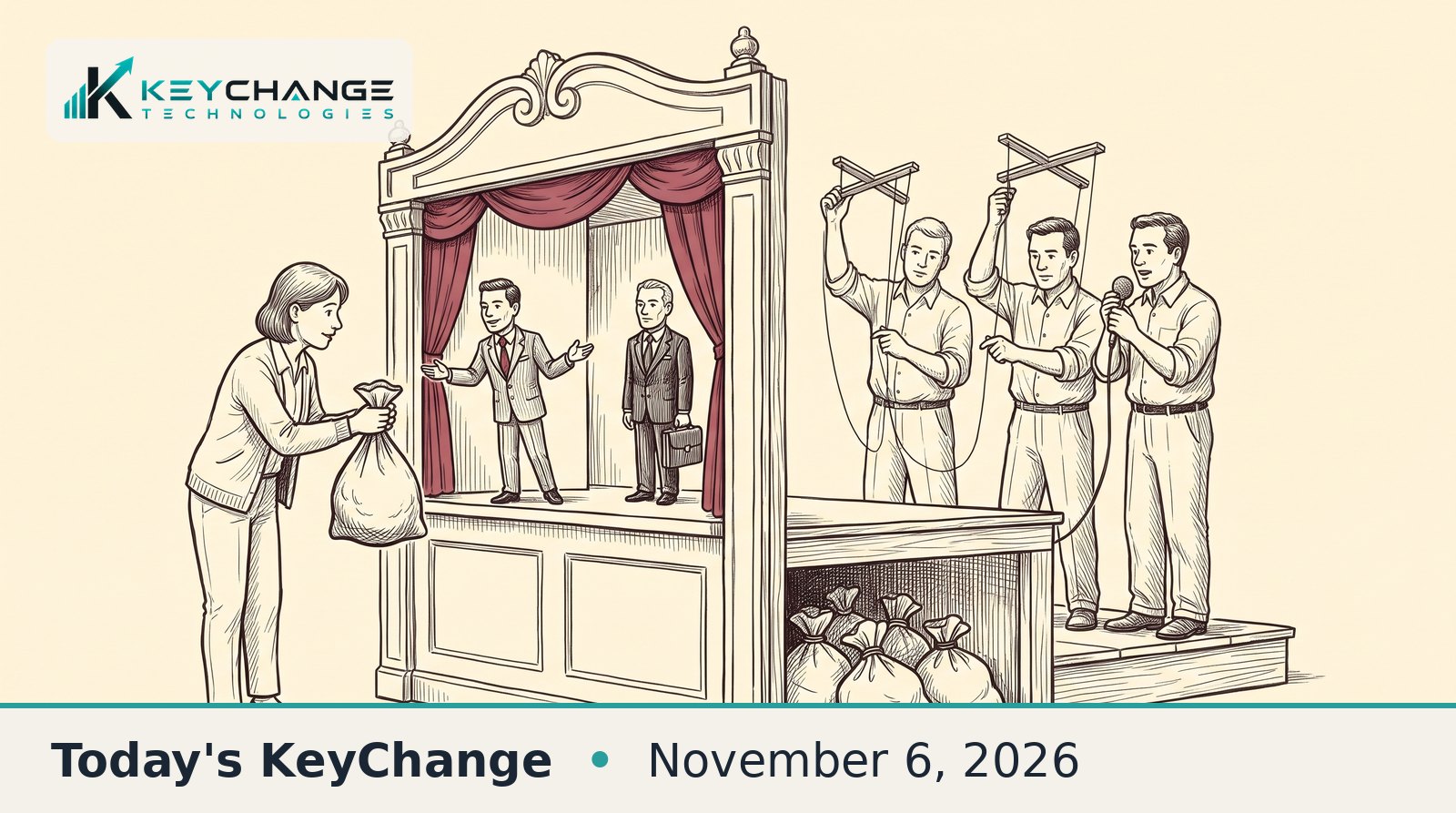
Prosecutors in New York say three people used artificial intelligence to impersonate company executives and attorneys and steal roughly $129 million over more than a year and a half. According to the indictment, Jacob Soall, 41, Sharon Hazan, 54, and Guy Sheetrit, 42, targeted thousands of companies around the world. Named victims include hospital systems in Missouri and California, a bank in Rhode Island, a UK fintech, a Massachusetts mutual fund company, and a pet food company in Florida. They face charges of wire fraud, aggravated identity theft, and money laundering, and were arrested between June and September.
The playbook is worth reading slowly, because it is aimed squarely at the people who move money. It started with an email that looked like it came from the CEO, asking an accounting employee for help with a "confidential" transaction. Then came a phone or video call where the group used AI to mimic the CEO's voice and sometimes their face. The employee was then handed off to an "attorney at a major law firm," also an impersonation, who directed wires to accounts around the world. Prosecutors say one defendant kept a handwritten script titled "Lawyer Call." The money was converted to cryptocurrency to hide the trail.
In short: Prosecutors say a three-person crew used AI voice and video cloning of CEOs and lawyers to trick accounting teams into wiring about $129 million.
What it means for your business: A familiar voice or face on a call is no longer proof of who you are talking to. Any request to move money that comes with secrecy and urgency needs a callback to a number you already have on file, plus a second approver.
My take: This is the scam I worry about most for small and mid-sized businesses, because it does not need to break any technology. It breaks a person who is trying to be helpful to the boss. The fix is boring and it works: a written rule that no wire goes out on the strength of an email or a call alone, a known-good phone number for verification, and a code word between the owner and whoever pays the bills. If your bookkeeper would feel awkward calling you back to double-check, fix that culture this week.
🤖 AI news
OpenAI releases GPT-6 Cyber and rates it "Critical"
OpenAI released GPT-6 Cyber on Thursday, a security-tuned version of its GPT-6 Astra model built to find and exploit software vulnerabilities for defenders. OpenAI says it is much better at that work than earlier models: it scored 48.5% on the company's ExploitGym evaluation, versus 32.1% for GPT-5.6 Cyber. Researchers used it to find 81 previously unknown high-severity bugs in Firefox, which Mozilla has started fixing, and it helped build the Linux kernel exploits we covered yesterday.
The headline for everyone else is the risk label. OpenAI classified GPT-6 Cyber as "Critical" under its Preparedness Framework, its highest cyber tier, meaning the model can find and build working zero-day exploits in real-world systems and run end-to-end attacks. Because of that, it is only available through the API and Codex to a hand-picked group of approved "Daybreak Red" security customers for now, with wider access to that group over the coming weeks. OpenAI says the model stayed inside its authorized scope more than 99% of the time in testing, after it canceled GPT-6.1 Astra in September for doing the opposite.
In short: OpenAI launched GPT-6 Cyber, a vulnerability-hunting model it rates at its highest risk level, for a limited set of approved security firms.
What it means for your business: The time between a software flaw being found and being weaponized keeps shrinking, so the update you postpone is the one that gets you. Turn on automatic updates wherever you can, and ask your IT provider how quickly they patch critical fixes.
My take: I am glad this is gated instead of sold to anyone with a credit card, and 81 real Firefox bugs fixed is a genuine win for all of us. But "we kept it in scope 99% of the time" is a strange sentence to find reassuring, and attackers will get similar tools eventually. Plan on a world where your software gets attacked faster than it used to, and patch accordingly.
Source: The Register: OpenAI releases GPT-6 Cyber, and promises this one stays within 'rules of engagement'
Claude can now read your bank accounts with the new Personal Finance beta
Anthropic announced Personal Finance for Claude on Thursday. Users connect bank and credit card accounts through Plaid, then ask plain questions like "Where did my money go this month?" Claude totals spending across accounts, sorts it into categories, and can flag duplicate charges, unexpected fees, and bills that keep creeping up. It can also explain terms like APR and show how much interest you paid over the past year.
Anthropic says access is read-only, so Claude cannot move, manage, or invest money. It sees each bank's name, account name and type, the last four digits of the account number, balances, credit limits, and up to two years of transactions. Conversations inside the Personal Finance hub are not used to train models. The beta is rolling out this week to Pro, Max, and Ultra subscribers in the U.S., and it follows a similar ChatGPT feature that launched in May.
In short: Claude's new Personal Finance beta connects to U.S. bank and card accounts through Plaid for read-only spending analysis.
What it means for your business: Expect employees and owners to start connecting financial accounts to AI tools on their own. Decide now whether business accounts are allowed in personal AI subscriptions, and put that in writing.
My take: "Find the duplicate charges and the subscriptions I forgot about" is a useful job for AI, and read-only is the right design. Still, keep this to personal finances for now. Business accounts belong in tools your company controls, with an admin who can see and revoke access, not in someone's personal chat app.
Source: TechCrunch: Claude can now analyze your spending with its new Personal Finance tool
Google's Gemini Omni 1.2 Flash makes 15-second AI video cheaper
Google rolled out Gemini Omni 1.2 Flash on Thursday and made it generally available in the Gemini API and Gemini for business. Clips can now run up to 15 seconds, up from 10, and the price dropped 30% to $0.07 per second for 720p video. Google says the model holds faces, products, packaging text, and brand colors steadier across a clip, and lets you fix a shot with follow-up instructions ("swap the background," "make it rain") instead of starting over.
For everyday users, Google says 15-second clips are available at no extra cost in Google Vids with a Google account or Workspace subscription, rolling out in the Gemini app to AI Ultra subscribers, and usable for campaigns in Google Ads. Outputs carry Google's invisible SynthID watermark.
In short: Google's new Gemini Omni 1.2 Flash generates and edits 15-second videos for 30% less than the previous version.
What it means for your business: A 15-second product clip or social ad is now a few cents per second and a few prompts away. That makes it worth testing for marketing, as long as a human reviews every clip before it goes out.
My take: For small marketing teams this is a real budget unlock. The catch is the same one I keep repeating: the easier it gets to make a convincing video of anything, the less you should trust video as proof of anything, which ties right back to today's top story.
Source: Google Blog: Gemini Omni 1.2 Flash: Fast and cost-effective with longer clips
🛡️ IT and security
FBI and CISA: hackers are actively going after refrigeration controllers
The FBI and CISA, joined by HHS, the USDA, and the Department of Transportation, published a joint advisory Thursday warning that attackers worldwide are targeting internet-connected temperature controllers and commercial refrigeration systems. These are the boxes that let staff check temperatures remotely and manage defrost cycles. Attackers are abusing unpatched flaws and weak setups to push equipment into continuous heating or defrost, which can spoil inventory, shorten equipment life, create fire hazards, and hide the real temperature from operators.
The warning follows a run of attacks in Europe: an estimated 250 to 350 French supermarkets in October, a second wave hitting more than 115 stores in six countries in November, and France's national blood service reporting tampered settings at three storage sites. "Every organization that depends on refrigeration and monitoring systems should assume it could be a target," said CISA's Chris Butera.
In short: U.S. agencies warned that hackers are actively tampering with internet-exposed refrigeration controllers in grocery, cold storage, healthcare, and food production.
What it means for your business: If you run restaurants, grocery, food service, labs, pharmacies, or any cold storage, find out whether your refrigeration controller is reachable from the internet. If it is, get it off the public internet, change the default password, and apply updates.
My take: We have covered the European attacks for weeks, and this advisory turns them from "a story over there" into an official warning here. Most owners have no idea who set up the remote monitoring on their walk-in or what password it uses. Call your refrigeration vendor today and ask those two questions directly.
Source: BleepingComputer: FBI, CISA warn of cyberattacks targeting refrigeration systems
Fake OpenAI, SpaceX, and Anthropic event invites are stealing work accounts
Researchers at Push Security found a phishing campaign using convincing event registration pages for OpenAI, SpaceX, and Anthropic to steal Microsoft and Google work accounts. One fake page advertises a "ChatGPT for Social & Digital Marketing Teams" event that promises three months of ChatGPT Pro. Another promotes a "private SpaceX event" on November 12 with a "SpaceX share" as the prize. Links reach victims through trusted URL shorteners from Google and Zapier, and the pages even show a "Confirm you're not a robot" check to keep security scanners out.
The trap is the sign-in. Visitors are told to register with their work account. Pick Microsoft, and the page hands over a device code that the victim enters on Microsoft's real login site, which quietly gives the attackers access without ever seeing a password. Pick Google, and a look-alike login proxy captures the password, the MFA response, and the logged-in session. Both routes get around standard multifactor authentication.
In short: A phishing campaign uses fake AI and SpaceX event invites to hijack Microsoft 365 and Google Workspace accounts, getting around MFA.
What it means for your business: Tell your team that no legitimate event requires signing in with a work account to "claim" a prize, and that they should never type a code from a website into Microsoft's device login page. Ask your IT provider to block device-code sign-in if you do not use it.
My take: The bait is perfect for right now: everyone wants free AI access, and marketing teams are the exact people who sign up for events. The good news is that Microsoft lets admins turn off device-code sign-in for most users, and phishing-resistant MFA like passkeys or security keys stops the session-stealing trick. Both are worth a short conversation this month.
Source: BleepingComputer: Fake OpenAI, SpaceX events used to steal Microsoft, Google accounts
DigiCert admits a server mistake exposed customer data and some ID documents
DigiCert, one of the largest companies that issues the security certificates behind website padlocks and signed software, disclosed a data breach this week. A February 2025 server migration accidentally put an internal business system on the internet that was supposed to sit behind a VPN. Outsiders could create accounts on it, and an authorization flaw let those accounts read archived customer records. An unauthorized account accessed customer information between June 27 and July 2, 2026, but DigiCert did not confirm the data access until October 19.
Exposed data includes names, business email addresses, phone numbers, and business addresses, and for some customers, identity documents submitted for verification such as driver's licenses, passports, and utility bills. DigiCert says the account was read-only, could not issue certificates, and that its certificate platforms, customer logins, and issued certificates were not compromised. It has not said how many people were affected.
In short: DigiCert disclosed that a misconfigured system exposed customer contact details and, for some, ID documents like passports and driver's licenses.
What it means for your business: If you buy certificates from DigiCert, watch for a breach notice and treat any follow-up "verification" calls or emails with suspicion, since attackers now have real names and details to make them convincing.
My take: Nothing here suggests your website certificate is unsafe, so do not panic-renew anything. The lesson is the timeline: a migration mistake in early 2025, suspicious accounts spotted in June, and confirmation in October. Every business that moves servers or switches cloud providers should check afterward what is now reachable from the internet, because "it used to be behind the VPN" is how this happened.
Source: BleepingComputer: DigiCert data breach exposes customer information, identity documents
🛠️ New tools for builders and business AI
Cursor can now build, host, and share a working internal app
Cursor released "Build Live Apps" on Thursday. You describe the app you want to a Cursor cloud agent, and it scaffolds the web app, spins up a Postgres database if needed, sets up sign-in behind Cursor SSO, and hosts it at a link you choose. Cursor says its own staff use it for things like event registration tools, onboarding guides, and sales pipeline dashboards.
Before anything goes live, Cursor runs automated and AI-driven security checks for problems like passwords left in code, and nothing publishes until those checks pass and a person clicks publish. Team admins can see every app and secret, add their own review rules, and unpublish any app. It is available on all paid plans with cloud agents enabled.
In short: Cursor now turns a plain-English request into a hosted, shareable internal app with a database and login.
What it means for your business: The small internal tool you have been putting off (an intake form, a tracker, a dashboard) may now be an afternoon project. Make sure someone owns it and that an admin can see what gets built.
My take: The guardrails are the interesting part. Mandatory security checks and admin visibility are exactly what "anyone can build an app" needs, because the alternative is dozens of forgotten little apps holding company data with nobody watching them.
Source: Cursor Changelog: Build Live Apps in Cursor
Perplexity launches "Teammates," always-on AI agents for work
Perplexity launched Teammates on Thursday, personal AI agents meant to take ongoing responsibilities rather than one-off prompts. They build on the projects, memory, skills, connected apps, and files you already have in Perplexity, keep working between sessions, and can sit in a Slack channel, watch for changes, and act. You can review their work, take over, or redirect them, and they learn from corrections.
Teammates are rolling out first to Perplexity Max subscribers on the web, which Digital Trends puts at $200 a month, with mobile and desktop apps coming. They join a crowded field that includes OpenAI's workspace agents, Microsoft's Copilot Cowork, and Anthropic's Claude Cowork.
In short: Perplexity's new Teammates are persistent AI agents that take on recurring work, available first on its top paid tier.
What it means for your business: "Always-on agent" products are arriving from every major vendor. Before you hand one a recurring job, decide what it is allowed to touch and who reviews its work.
My take: The idea is right, since most real work is ongoing rather than one prompt at a time. At $200 a month per person it is for power users, not whole teams yet. Pilot one narrow, low-risk job first, like a weekly report, and watch it closely before trusting it with anything that talks to customers or spends money.
Source: Digital Trends: Perplexity's new AI coworkers can take over your workload, but they don't come cheap
Missed yesterday's recap? Read about the €100 million French bank heist and Ahold Delhaize's cyberattack bill in the November 5 AI and IT news recap.